In This Article
What This Means
- NIST’s Selection of HQC: A Critical Signal for Enterprises
- Enterprise Impact and Migration Challenges
- How QuantumGenie Fits in Navigating HQC Adoption
NIST’s Selection of HQC: A Critical Signal for Enterprises
In March 2025, NIST announced HQC as its fifth algorithm for post-quantum encryption, positioning it as a contingency safeguard alongside ML-KEM, the primary choice for general encryption. Unlike ML-KEM, HQC is founded on different mathematical principles, providing resilience in case vulnerabilities emerge in the incumbent algorithm.
This development is more than a cryptographic footnote; it reshapes enterprise migration roadmaps. Organizations with ongoing or planned post-quantum cryptography initiatives must now expand their inventories and migration strategies to account for HQC, accelerating the need for comprehensive crypto-agility and diversified algorithm support.
Enterprise Impact and Migration Challenges
The introduction of HQC introduces complexities for large-scale cryptographic migration programs. Enterprises must update risk assessments, revisit compliance frameworks, and adjust their cryptographic component bills of materials (CBOM) to incorporate HQC’s specifications. This dual-algorithm environment increases operational overhead but fundamentally strengthens security posture against emerging quantum threats.
Furthermore, the presence of alternative PQC algorithms heightens the importance of continuous discovery and visibility. Organizations must identify every cryptographic asset impacted by these evolving standards to avoid gaps in protection and ensure seamless migration, balancing operational continuity with future-proof security.

Comparison of NIST’s Selected PQC Algorithms and Migration Considerations
| Algorithm | Mathematical Basis | Role |
|---|---|---|
| ML-KEM | Module Learning with Errors | Primary General Encryption |
| HQC | Code-based Cryptography | Backup / Contingency |
How QuantumGenie Fits in Navigating HQC Adoption
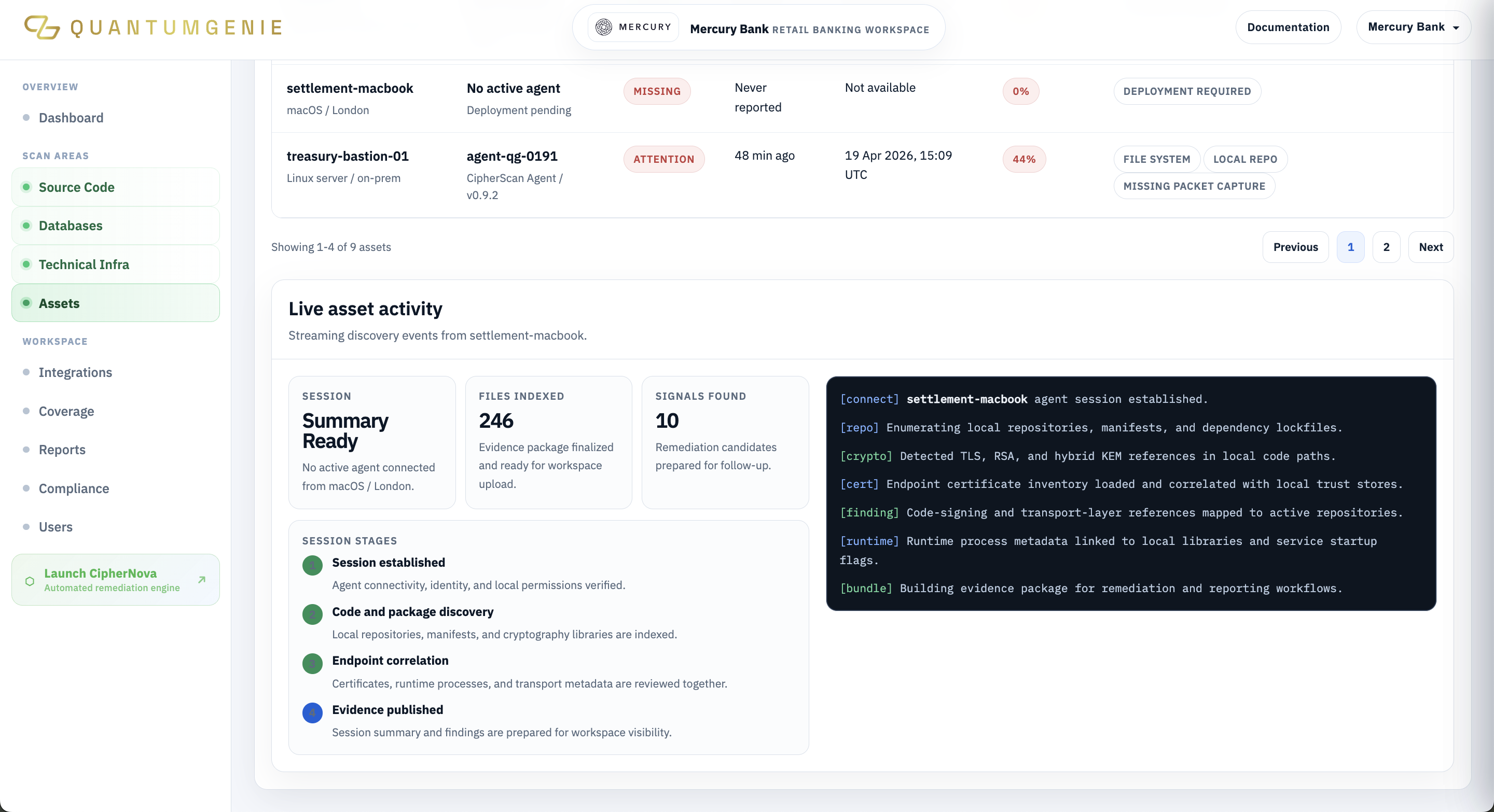
QuantumGenie’s platform offers the crucial capabilities enterprises need to respond effectively to NIST’s HQC announcement. CipherScan enables exhaustive discovery of cryptographic instances across diverse environments, building comprehensive inventories that include new and evolving standards like HQC.
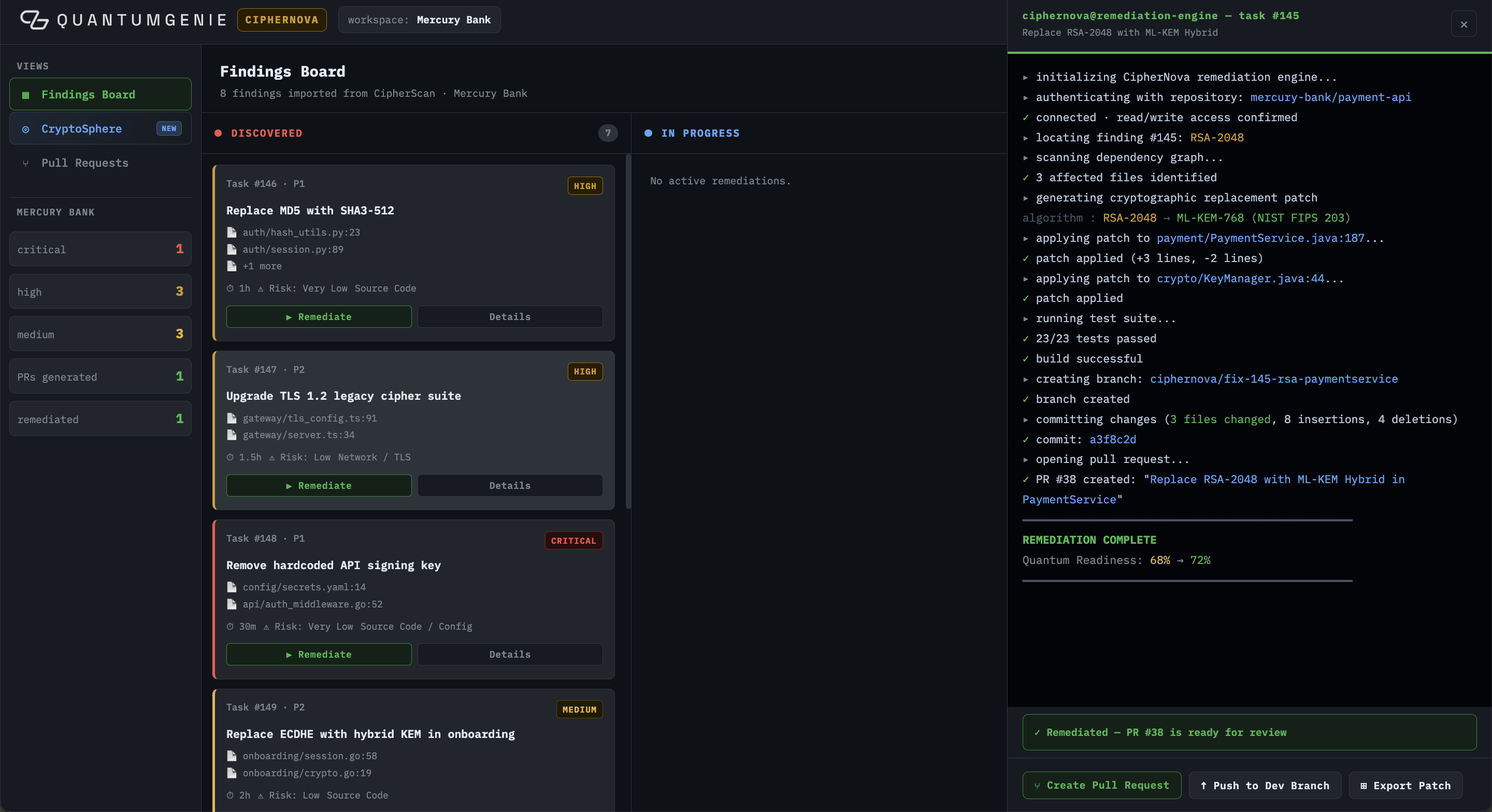
Beyond discovery, QuantumGenie facilitates prioritization of migration tasks by assessing cryptographic exposure risk and supports the orchestration of remediation workflows in response to multi-algorithm adoption scenarios. This structured approach empowers security leaders to enforce crypto-agility, maintain compliance readiness, and execute methodical, low-risk transitions to new PQC standards.
Frequently Asked Questions
Why does NIST select a backup PQC algorithm like HQC in addition to the primary ML-KEM?
NIST selects a backup algorithm to mitigate risks associated with potential weaknesses being discovered in the primary algorithm. HQC’s different mathematical basis provides security diversity, ensuring cryptographic resilience if ML-KEM is compromised.
How should enterprises adjust their migration strategies in response to HQC’s selection?
Enterprises should expand their cryptographic inventories to detect usage scenarios where HQC could be applied, reassess risk profiles, and enhance crypto-agility processes to support multiple PQC algorithms, ensuring compliance and strong future security posture.
Watch The Quantum Threat
Sources And Further Reading
- NIST Selects HQC as Fifth Algorithm for Post-Quantum Encryption NIST · Mar 11, 2025
- Apple Unveils PQ3 Post-Quantum Encryption for iMessage TechTarget · Feb 21, 2024