In This Article
What This Means
- The Imperative of Continuous Cryptographic Change in Enterprises
- Challenges in Post-Quantum Migration: Insights from Research and Practice
- How QuantumGenie Advances Continuous Cryptographic Change Management
The Imperative of Continuous Cryptographic Change in Enterprises
The transition to post-quantum cryptography is no longer a one-off project but an ongoing operational challenge for enterprises. The recent redesign of key management platforms to enable continuous cryptographic updates illustrates a pivotal shift: organizations must now architect their cryptographic environments for repeated and seamless algorithm changes, as new post-quantum standards and vulnerabilities emerge. Agent-based deployments, like those highlighted by PKWARE’s latest architecture, enable cryptographic agility by allowing enterprises to update encryption algorithms dynamically without disrupting business workflows or compromising security.
This approach acknowledges that static, hardcoded cryptographic implementations are incompatible with the fast-evolving post-quantum threat landscape. Enterprises must prepare to pivot rapidly as standards evolve, vulnerabilities are discovered, and compliance requirements shift. Continuous cryptographic change mitigates exposure by reducing the window during which outdated or vulnerable algorithms remain in use.
Challenges in Post-Quantum Migration: Insights from Research and Practice
Research efforts have identified cryptographic agility as a multi-dimensional challenge encompassing discovery, inventory management, risk assessment, and operational orchestration. Understanding which systems, applications, and data repositories leverage cryptography—and how—forms the foundational step toward effective migration. Yet discovery alone is insufficient without context-aware prioritization that guides enterprise teams in managing migration risks and resources effectively.
Moreover, seamless execution of algorithm updates depends on platforms that integrate closely with existing security frameworks and operational workflows. The research underscores the complexity of maintaining secure key management throughout migration phases, navigating legacy dependencies, and enabling rollback and fallback options for resilience. These insights align closely with the recent key management reinvention, demonstrating practical advances tackling these theoretical challenges.
Key Enterprise Imperatives for Continuous Cryptographic Change
| Imperative | Description | Enterprise Implications |
|---|---|---|
| Cryptographic Discovery and Inventory | Comprehensive identification of all cryptographic assets and dependencies | Enables risk assessment and migration planning with full visibility |
| Risk-Based Prioritization | Ranking cryptographic components by vulnerability and criticality | Focuses remediation efforts on highest-impact targets to optimize resources |
| Operational Workflow Orchestration | Integrated management of remediation tasks and algorithm updates | Reduces error and downtime during transition phases |
| Cryptographic Agility Architecture | Infrastructure supporting dynamic, agent-based cryptographic updates | Supports seamless transition to new algorithms without disrupting business operations |
How QuantumGenie Advances Continuous Cryptographic Change Management
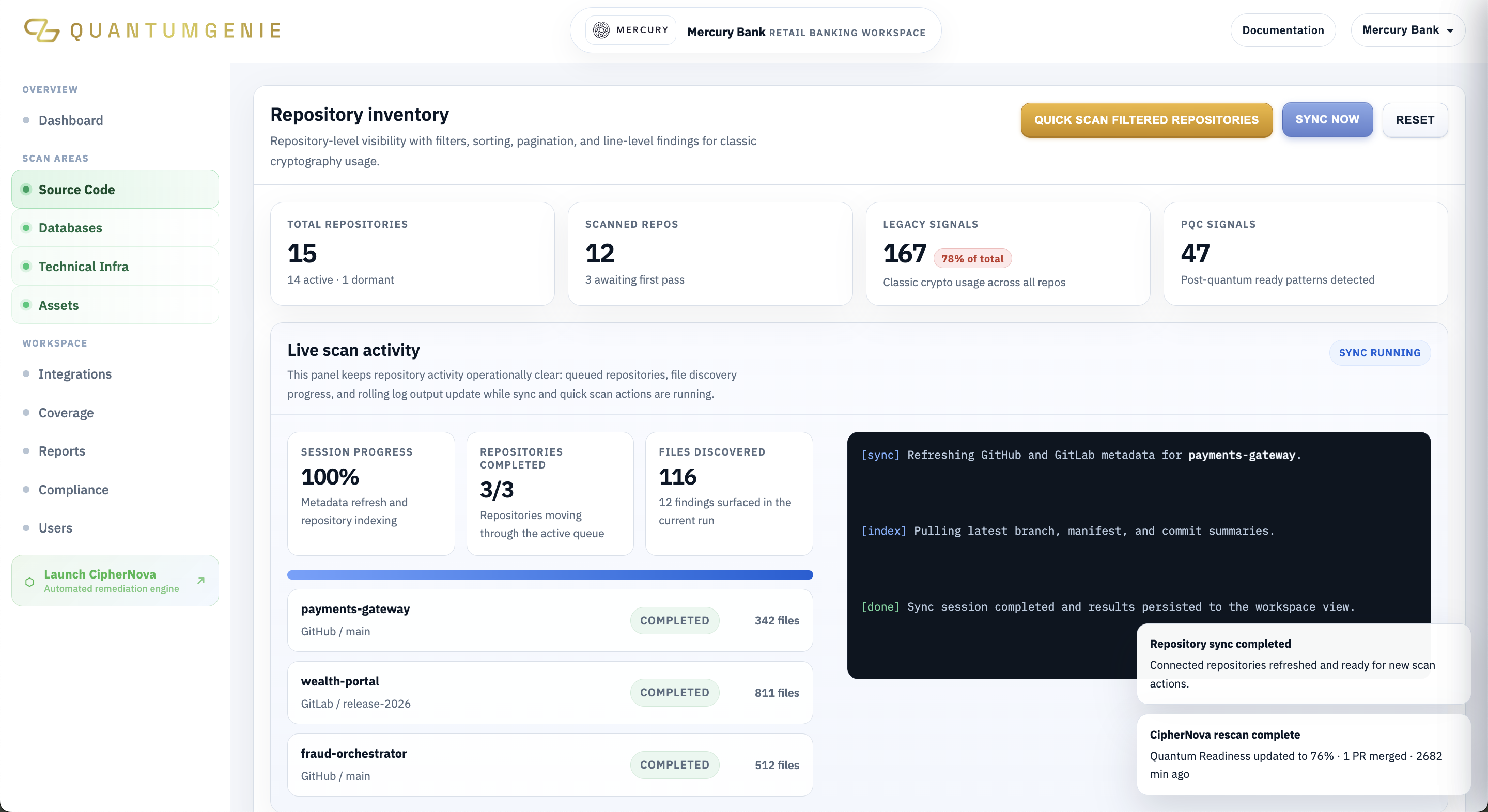
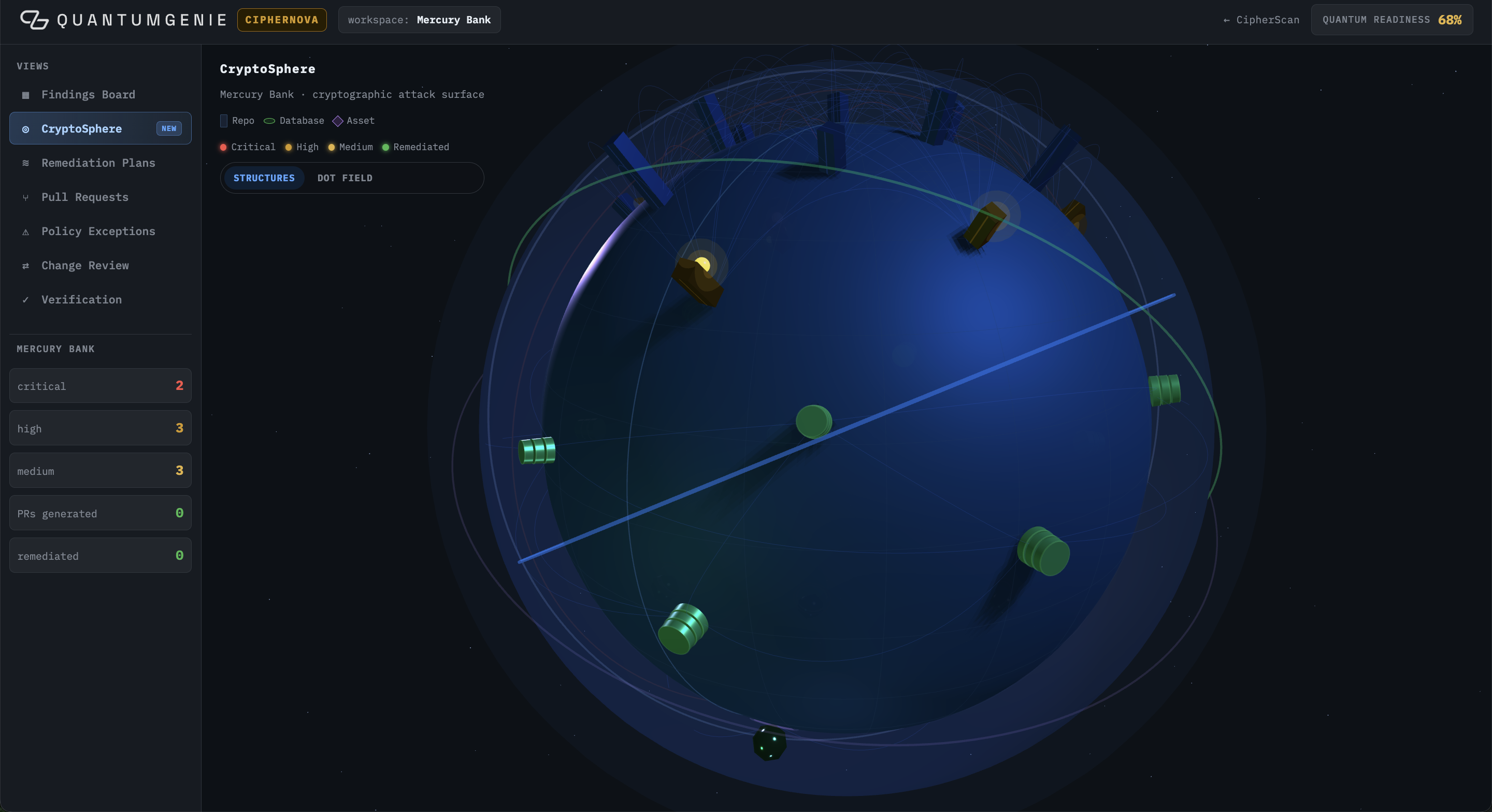
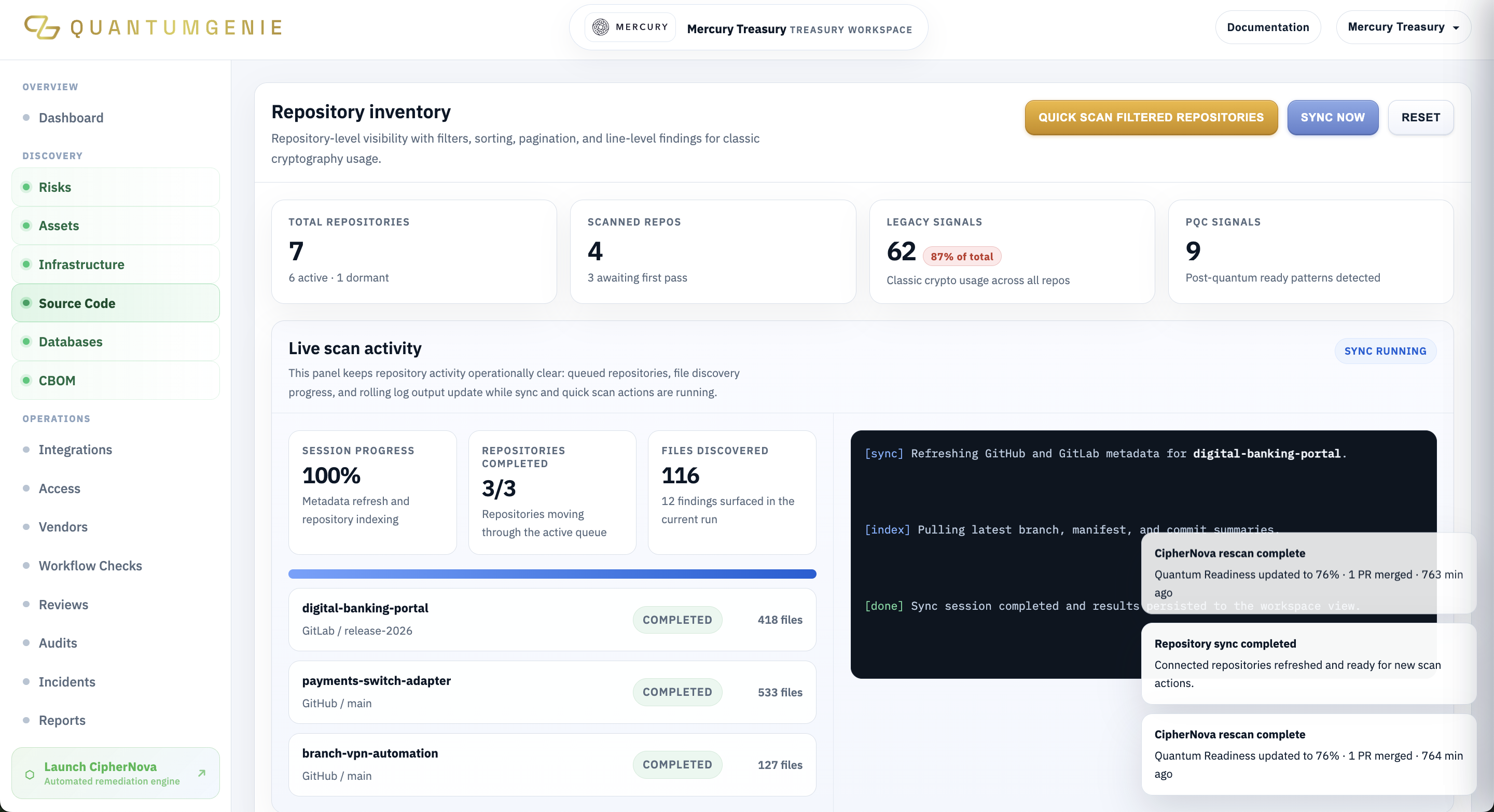
QuantumGenie complements these advances by providing enterprises with a comprehensive cryptographic inventory and a detailed Component Bill of Materials (CBOM). This enables organizations to visualize their entire cryptographic footprint across websites, certificates, source code, infrastructures, and applications—critical for maintenance of continuous cryptographic changes.
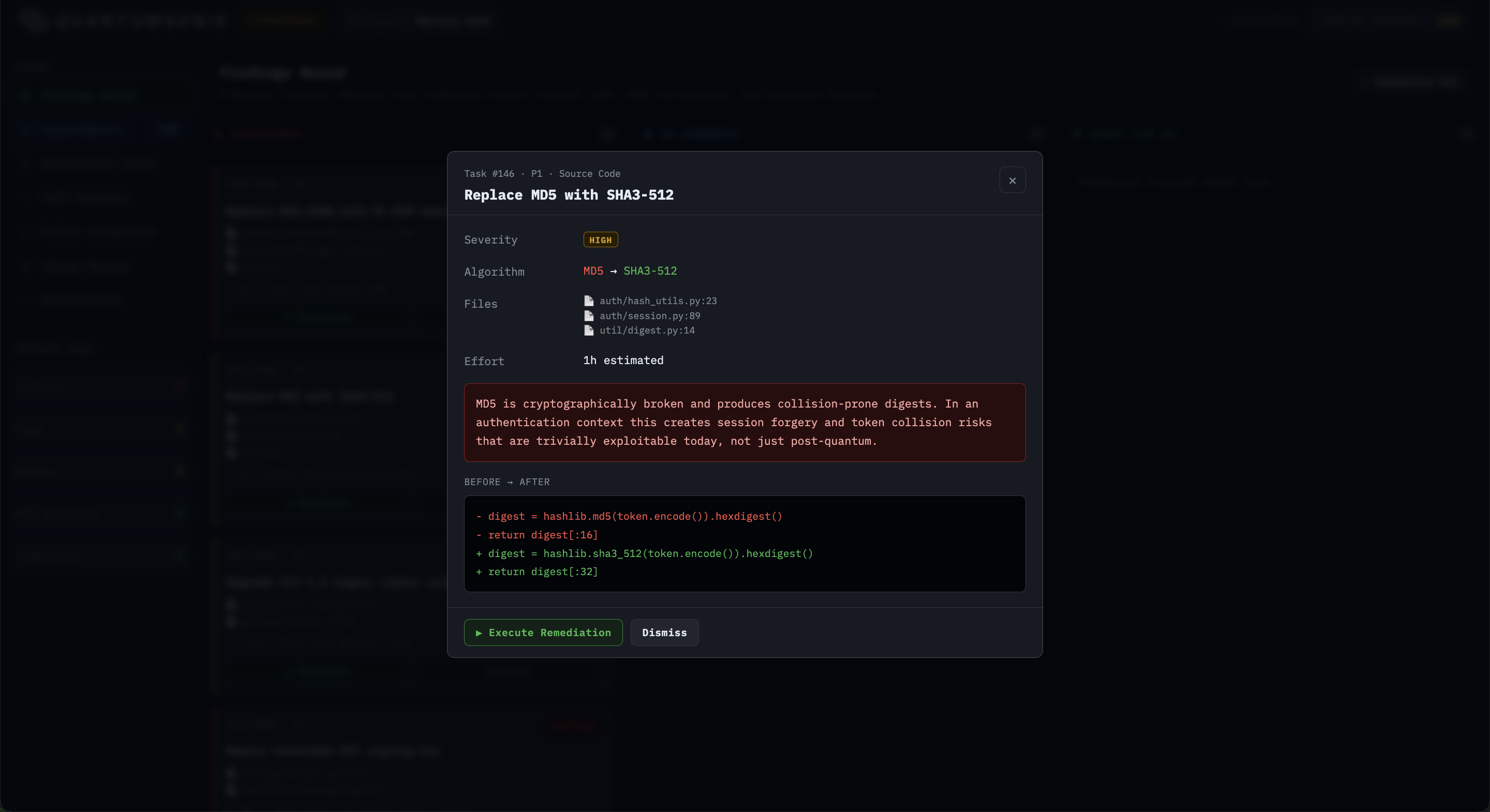
By prioritizing migration risks based on cryptographic exposure and offering workflow orchestration for remediation, QuantumGenie streamlines the migration lifecycle into manageable, risk-based phases. Its operational visibility empowers teams to confidently plan and execute post-quantum algorithm swaps as new standards or vulnerabilities arise, supporting the agent-driven updates reflected in emerging key management architectures. For enterprises adopting continuous cryptographic change strategies, QuantumGenie acts as an indispensable control and governance layer that ensures security and compliance throughout the transition journey.
Frequently Asked Questions
Why is continuous cryptographic change important for post-quantum readiness?
Continuous cryptographic change allows enterprises to adapt their cryptographic algorithms dynamically as new post-quantum standards emerge and vulnerabilities are discovered. This minimizes exposure to outdated or insecure algorithms and ensures ongoing compliance with evolving security requirements.
How does QuantumGenie assist enterprises in managing cryptographic agility?
QuantumGenie facilitates discovery and inventory of cryptographic assets, prioritizes migration risks based on exposure, plans crypto-agility strategies, and operationalizes remediation workflows. This end-to-end support helps enterprises manage continuous cryptographic changes systematically and securely.
Watch The Quantum Threat
Sources And Further Reading
- PKWARE Re-Engineers Key Management for Continuous Cryptographic Change PKWARE · Jun 1, 2026
- Identifying Research Challenges in Post Quantum Cryptography Migration and Cryptographic Agility arXiv · Sep 16, 2019