In This Article
What This Means
- Understanding Enterprise PQC Readiness Today
- Key Strategic Frameworks for Migration Success
- How QuantumGenie Empowers Your PQC Journey
Understanding Enterprise PQC Readiness Today
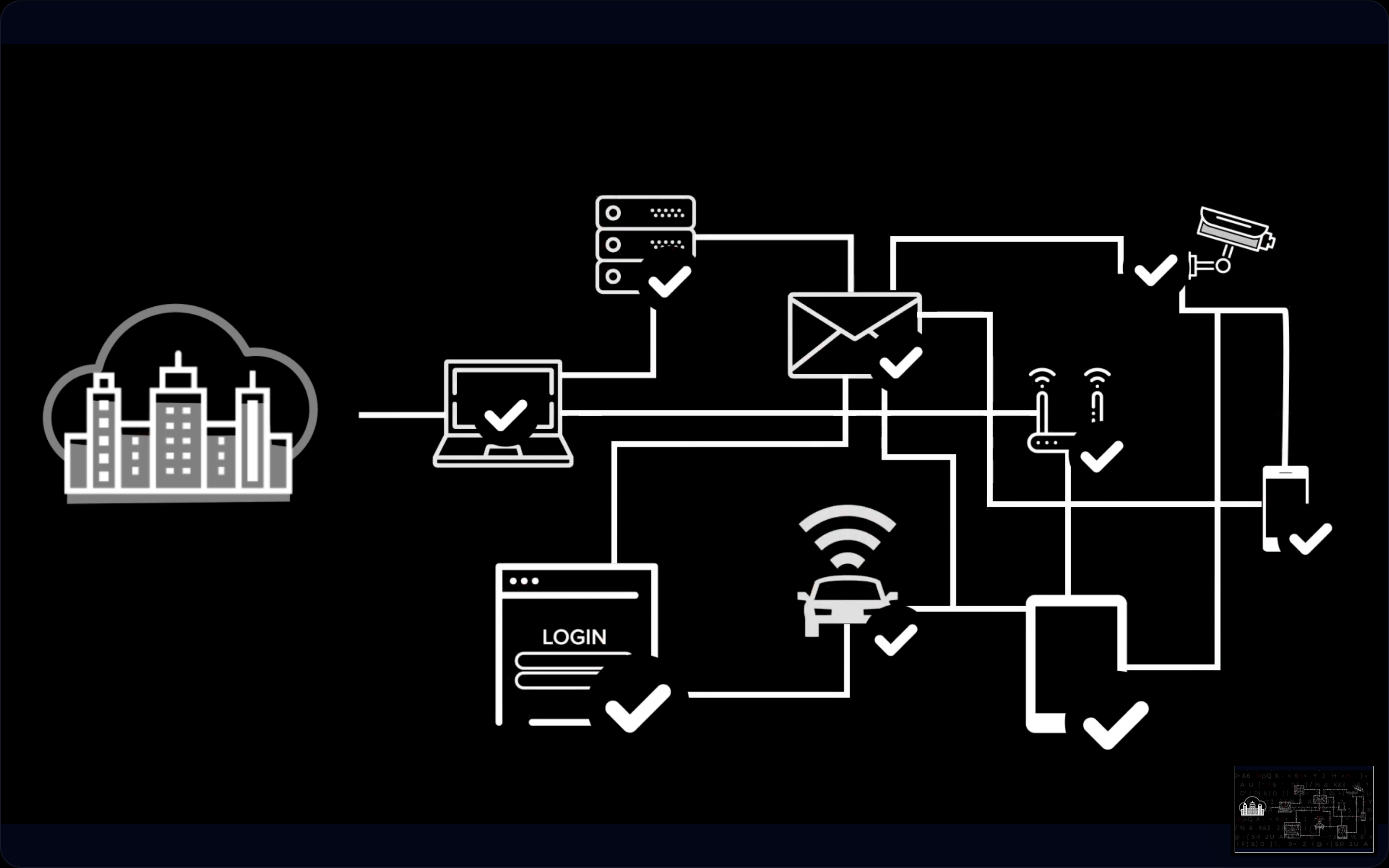
The post-quantum cryptography readiness report from Cyber Technology Insights offers a detailed snapshot of the current enterprise landscape for PQC migration, uncovering gaps between emerging standards and practical implementation. As NIST's finalized PQC algorithms gain traction, organizations face intense pressure to not only understand these new cryptographic primitives but also to architect migration strategies that mitigate risks posed by adversaries capable of 'harvest now, decrypt later' attacks. Recognizing that PQC migration is complex and multi-dimensional, the report highlights issues such as diverse legacy systems, fragmented cryptographic inventories, and the scarcity of specialized expertise among security teams.
Key Strategic Frameworks for Migration Success
The report articulates a strategic framework emphasizing phased migration, beginning with comprehensive discovery and cryptographic asset management, continuing through risk-based prioritization of vulnerable systems, and culminating in the deployment of crypto-agile infrastructure. This approach mirrors industry best-practices underscored by the LayerLogix 2026 roadmap, which stresses the urgency of early inventory efforts and the need for a structured, measurable migration program. Moreover, the concept of software-defined cryptography from recent research points toward centralized, automated enforcement of cryptographic policy—a critical enabler to maintain agility as PQC algorithms and standards continue to evolve.
Phased Framework for Enterprise PQC Migration
| Phase | Focus Area | Key Activities |
|---|---|---|
| 1: Discovery | Cryptographic Asset Inventory | Scan infrastructure, code, and keys to build CBOM |
| 2: Risk Prioritization | Vulnerability and Threat Assessment | Evaluate cryptographic strength and impact of compromise |
| 3: Crypto-Agility Implementation | Policy and Infrastructure Modernization | Deploy software-defined cryptography and PQC algorithms |
| 4: Compliance and Governance | Audit and Certification Preparation | Provide traceability and evidence for regulators |
How QuantumGenie Empowers Your PQC Journey
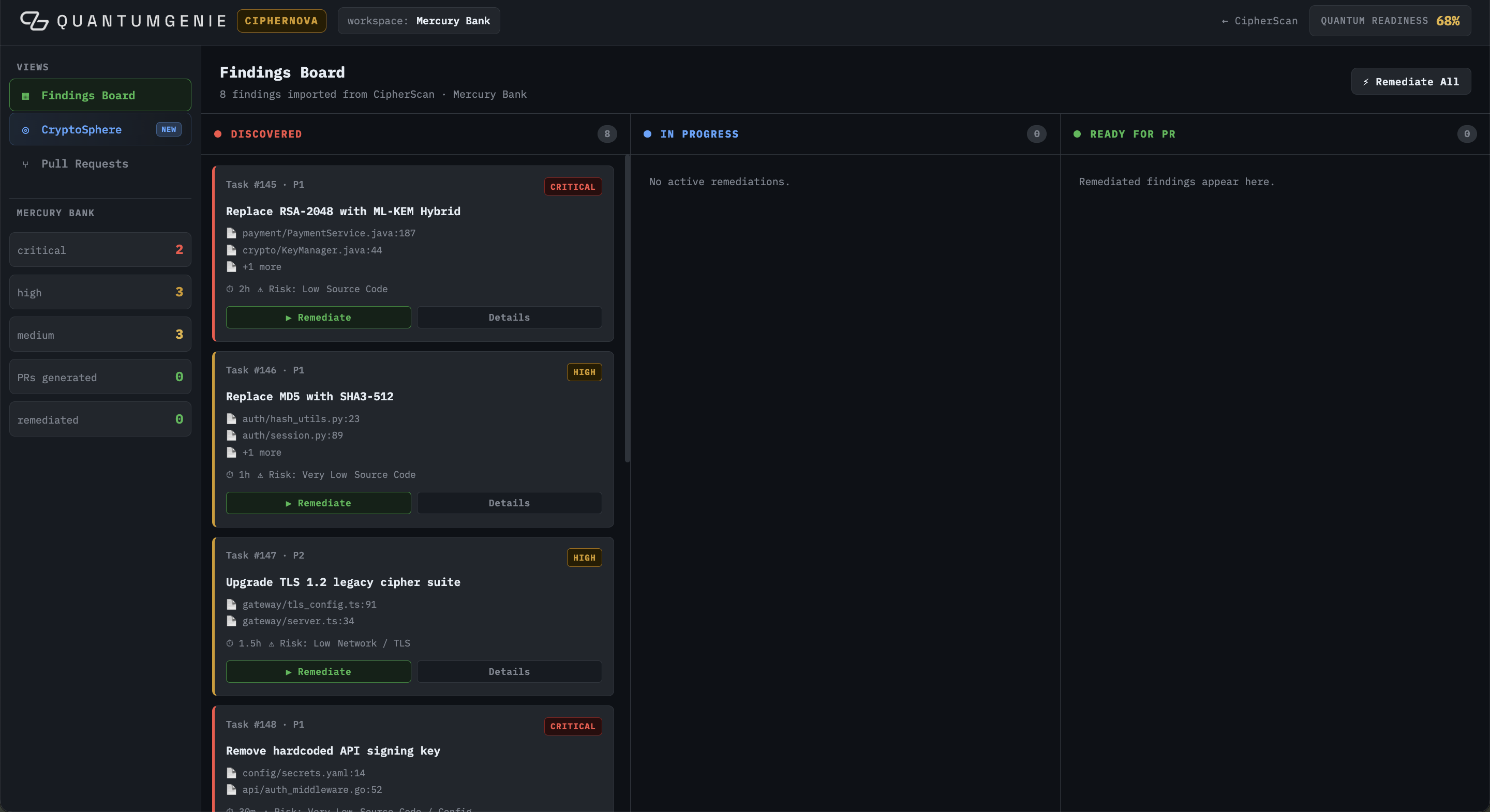
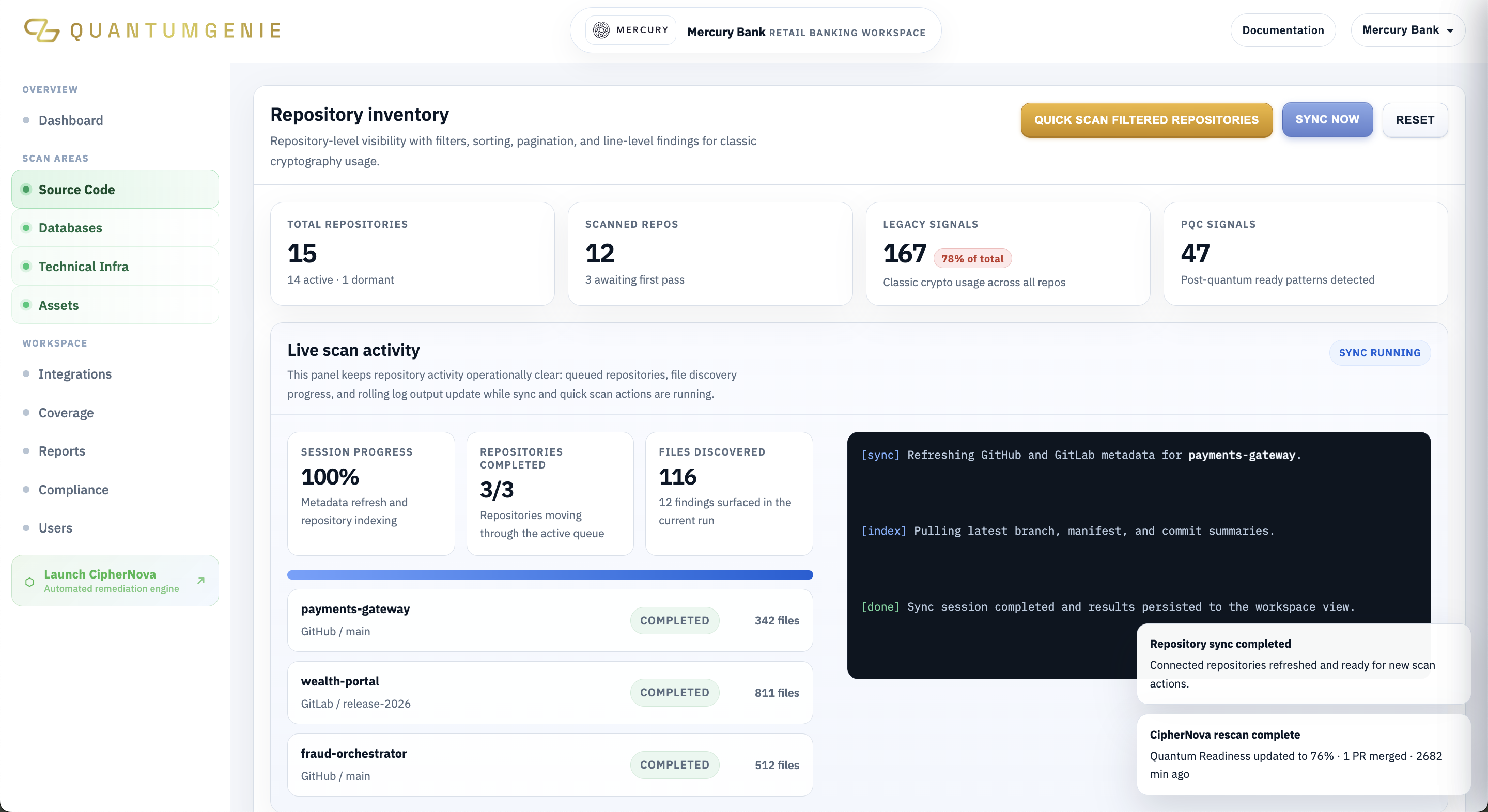
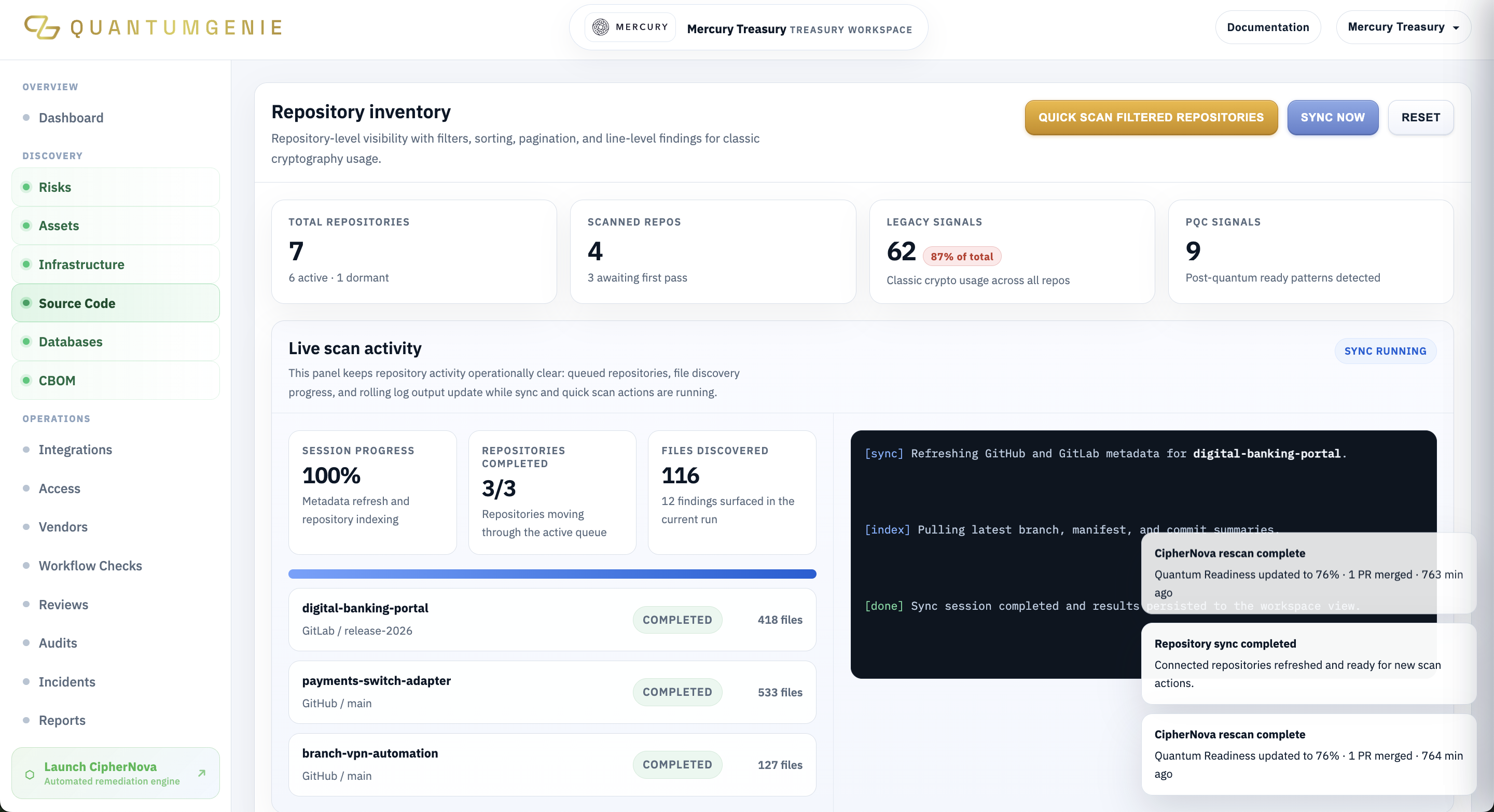
QuantumGenie addresses the fundamental prerequisite uncovered in these analyses: visibility. Through its CipherScan platform, it discovers and inventories cryptographic assets spanning websites, certificates, applications, and infrastructure, facilitating the creation of a comprehensive cryptographic bill of materials (CBOM). Coupled with risk prioritization and customizable migration workflows in CipherNova, QuantumGenie operationalizes the strategic frameworks recommended by the industry report and roadmaps. It equips enterprise security, architecture, and compliance teams to plan, track, and govern their PQC migrations with the rigor necessary to meet evolving standards and thwart looming quantum threats.
Frequently Asked Questions
Why should enterprises prioritize discovering all cryptographic assets before migrating to PQC?
A complete and accurate cryptographic inventory is critical to identify vulnerable assets that require migration, avoid blind spots, and develop an effective risk-based remediation plan. Without this knowledge, enterprises may leave exposures unaddressed, undermining security.
How does cryptographic agility support long-term PQC readiness?
Cryptographic agility enables an organization to quickly switch cryptographic algorithms and protocols in response to new threats or standards without disruptive rewrites. It ensures the enterprise can adapt to ongoing PQC developments and maintain secure operations over time.
Watch The Quantum Threat
Sources And Further Reading
- Post-Quantum Cryptography: Enterprise Guide to Quantum-Safe Security Cyber Technology Insights · May 14, 2026
- Post-Quantum Cryptography Migration: 2026 Roadmap LayerLogix · Jun 12, 2026
- Software-Defined Cryptography: A Design Feature of Cryptographic Agility arXiv · Apr 2, 2024