In This Article
What This Means
- NIST PQC Standards Signal a Structured Enterprise Migration Era
- Practical Imperatives: Visibility, Prioritization, and Migration Planning
- How QuantumGenie Fits for NIST-Compliant Enterprise PQC Migration
NIST PQC Standards Signal a Structured Enterprise Migration Era
The National Institute of Standards and Technology (NIST) has finalized post-quantum cryptography (PQC) standards, providing a vital framework for enterprises embarking on migration from classical to quantum-resistant algorithms. These standards move the PQC conversation from theory to enterprise-grade implementation, articulating concrete steps and recommended processes for cryptographic transition. The key spotlight is on establishing a comprehensive cryptographic inventory—something too often underestimated yet absolutely critical for successful migration.
For Chief Information Security Officers (CISOs) and enterprise architects, the NIST standards emphasize that without visibility into where and how cryptography is used across infrastructure, software, certificates, and applications, migration efforts risk being incomplete and vulnerable. This inventory forms the cryptographic bill of materials (CBOM), a foundational governance asset that enables prioritization and measured risk reduction as quantum threats become more immediate.
Practical Imperatives: Visibility, Prioritization, and Migration Planning
Beyond inventory creation, NIST outlines a phased migration process demanding ongoing discovery, policy enforcement, and verification. Enterprises must identify high-risk cryptographic assets, prioritize their migration based on risk and exposure, and prepare proof points for future audits and compliance. This is a complex operation requiring platforms that unify discovery and remediation workflows in a continuous feedback loop.
Supporting this approach, a recent industry reminder from Google underscores the urgency: its deadline to complete PQC migration by 2029 illustrates how leading organizations are racing to meet imminent quantum resilience requirements. The path to 2029 isn’t just about algorithm swaps—it demands a strategic, transparent, and auditable approach to cryptographic lifecycle management at scale.

Key Steps in Enterprise Post-Quantum Cryptography Migration According to NIST
| Step | Description | Enterprise Implication |
|---|---|---|
| Cryptographic Inventory and CBOM | Comprehensively identify all cryptographic assets across systems and software. | Establishes governance baseline and migration scope. |
| Risk Prioritization | Evaluate exposure and impact of cryptographic assets. | Focuses resources on highest-risk endpoints first. |
| Migration Planning and Testing | Develop phased plan to replace legacy crypto with PQC algorithms and test integration. | Ensures functional continuity and security validation. |
| Compliance Readiness | Document and verify migration stages to ensure auditability. | Supports regulatory and internal policy adherence. |
How QuantumGenie Fits for NIST-Compliant Enterprise PQC Migration
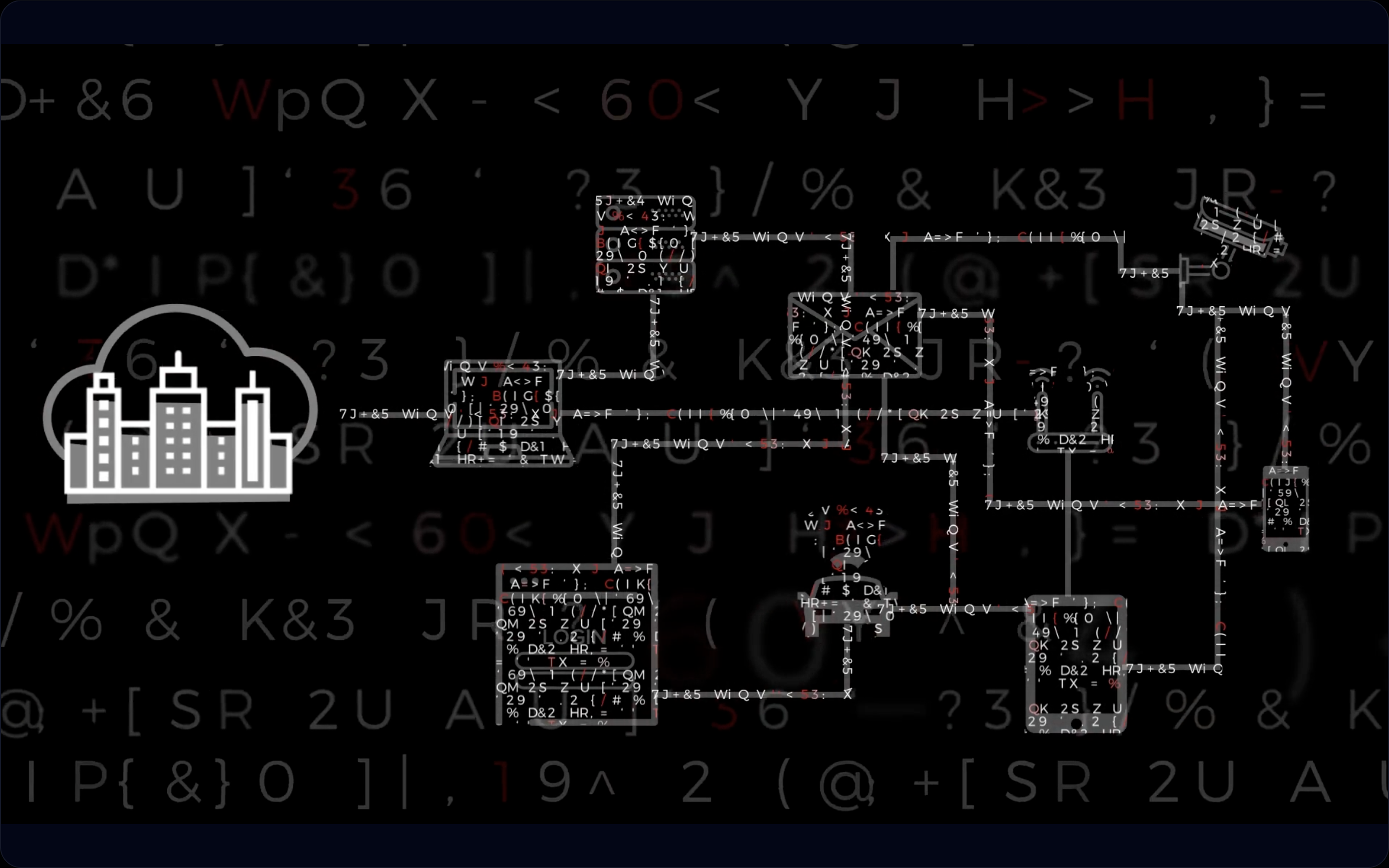
QuantumGenie’s platform aligns closely with this enterprise roadmap from NIST. CipherScan delivers the essential foundational visibility, scanning codebases, infrastructure, certificates, and integrations to build a thorough cryptographic inventory and CBOM. This inventory is critical for understanding where PQC algorithms must be integrated or legacy cryptography retired.
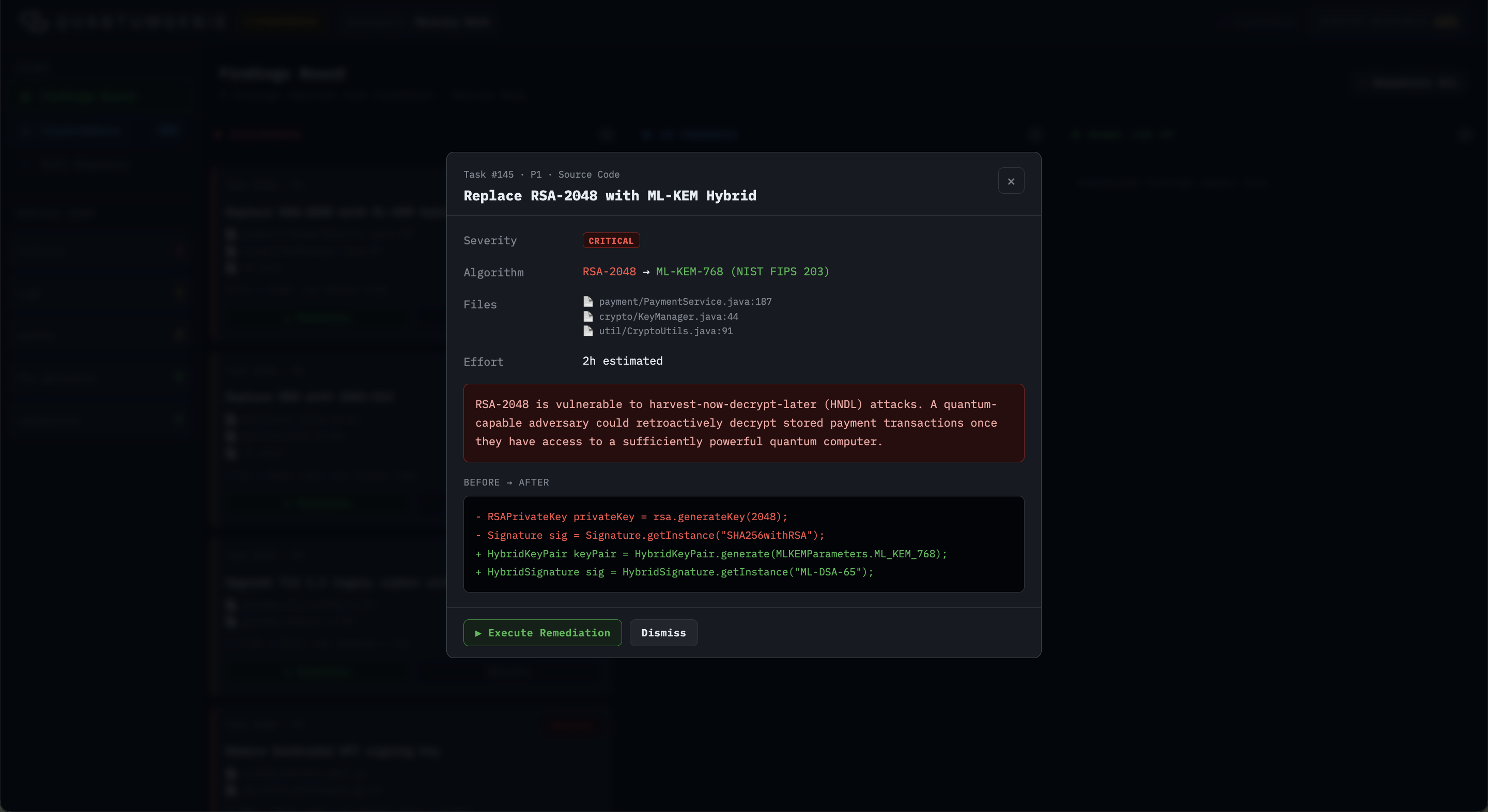
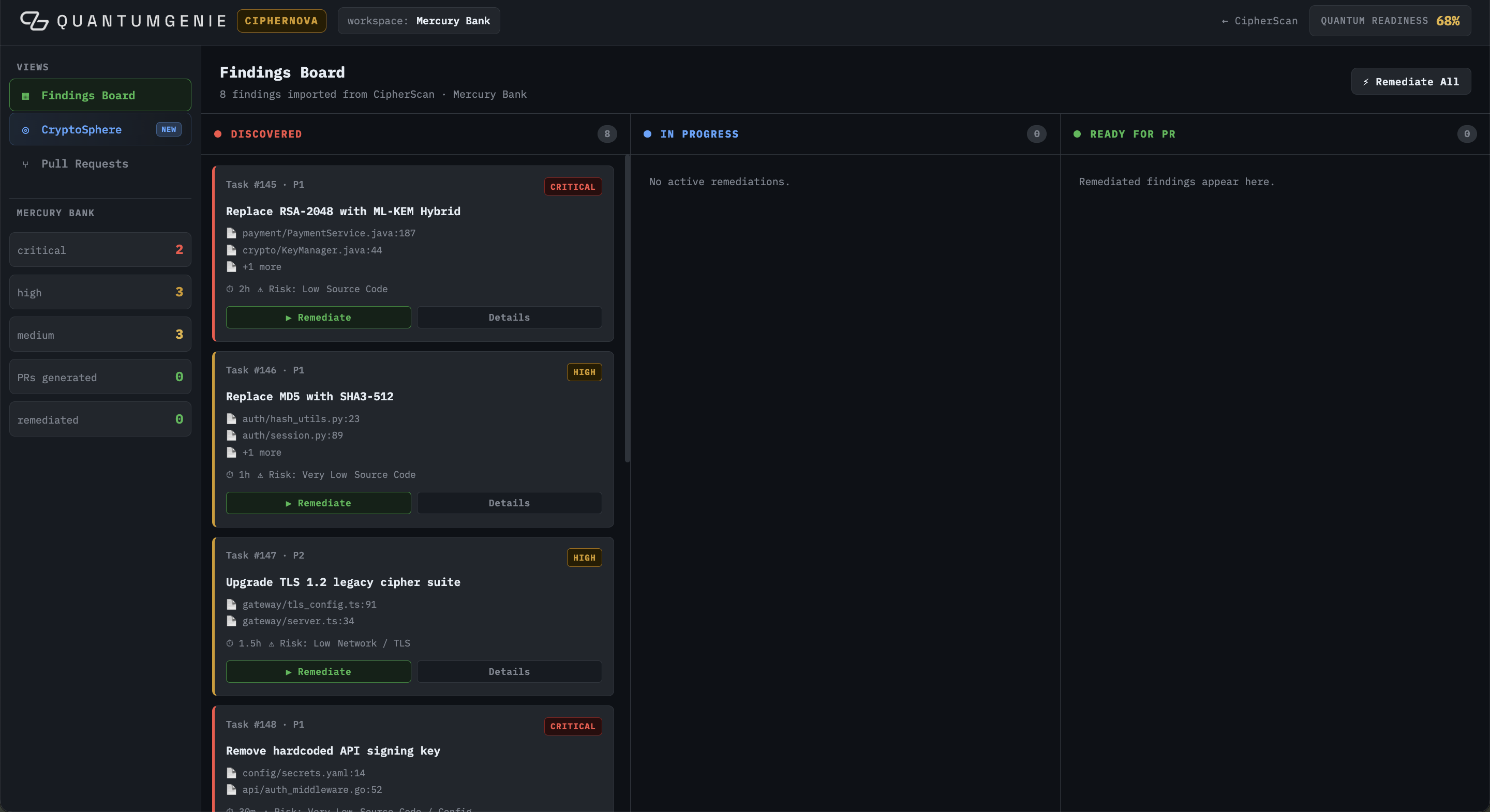
CipherNova complements discovery by enabling enterprises to operationalize their migration plans with workflow governance, risk-based prioritization, and exception handling while maintaining audit trails aligned with compliance demands. This integrated approach supports continuous discovery and active remediation, helping enterprises transition confidently and verifiably toward PQC compliance ahead of impending deadlines such as Google’s 2029 milestone.
Frequently Asked Questions
Why is a cryptographic inventory essential for PQC migration?
A cryptographic inventory provides a detailed map of all encryption use across an enterprise’s systems, applications, and data flows, forming the foundation for targeted and risk-based migration planning. Without this visibility, organizations cannot effectively prioritize or validate PQC adoption.
How does QuantumGenie support compliance with NIST PQC standards?
QuantumGenie automates the discovery of cryptographic assets and supports the creation of cryptographic bill of materials, enabling transparent prioritization and documented workflows that align with NIST requirements for phased, auditable PQC migration.
Watch The Quantum Threat
Sources And Further Reading
- NIST Post-Quantum Cryptography Standards: The Enterprise Summary Quantum Security Defence · Apr 5, 2026
- Watch Out Bitcoin Devs. Google Says Post-Quantum Migration Needs to Happen by 2029. CoinDesk · Mar 28, 2026